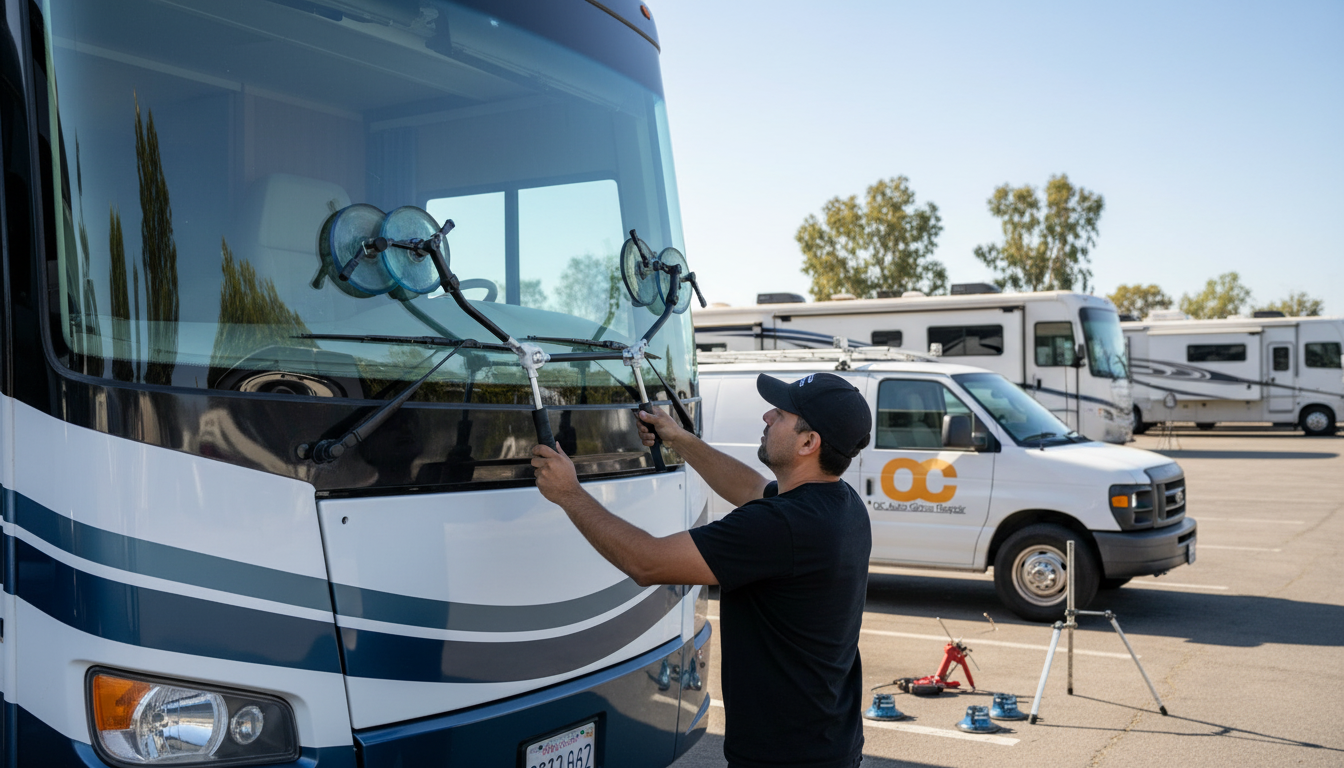
Keep safety and clear visibility with precise windshield chip and crack repair, high clarity resin work, and upfront estimates.
Commercial auto glass repair and replacement covers windshield chip patterns like bullseye, star break, and combination break when repair criteria are met, plus full replacement for long cracks, edge damage risk, distortion in critical viewing zones, or sealing problems. OC Auto Glass Repair also replaces side window glass, door glass, back glass, quarter glass, and vent glass using the correct glass type and configuration match.
Every job starts with a damage inspection that considers impact depth, crack legs, edge distance, and driver line of sight. Windshield replacement uses professional urethane bonding with cure timing and safe drive away time communication. Camera viewing areas receive careful inspection, with calibration coordination available when required.
We call back within minutes – same day available
Windshield damage affects visibility and structural support. Repair and replacement are selected using safety based criteria and glass condition.
Windshield repair focuses on limited impact damage, such as a bullseye, star break, or a small chip that meets safety criteria. Work targets crack growth control, optical clarity, and continued windshield strength. Technicians confirm damage location, depth, and proximity to the edge before recommending repair.
Windshield replacement is recommended for long cracks, edge damage risk, multiple impacts, glass distortion in critical viewing zones, and sealing problems. Replacement uses laminated safety glass matched to vehicle configuration, proper urethane bonding, and safe drive away time communication.
Clear criteria reduce delays and support safe outcomes for commercial vehicles. Decisions are based on damage type, damage location, and glass performance.
Repair is commonly considered when damage is small, stable, and outside critical viewing zones, with intact lamination and no spreading edge risk. A technician checks for contamination, moisture, and depth that can reduce repair effectiveness.
Replacement is commonly recommended when cracking is long, edge damage is present, visibility distortion exists, or the seal is compromised. Multiple impacts, pitting that reduces clarity, and damage near camera viewing areas often shift the recommendation toward replacement.
Commercial window replacement supports safety, security, and weather sealing for business vehicles. Glass type and fitment are matched to the exact location.
Side windows are commonly tempered safety glass, and replacement restores safe operation and proper sealing. Glass fitment is matched to door frame tolerances and window channel alignment.
Door glass replacement focuses on correct glass thickness, channel alignment, and stable operation for frequent open and close cycles. Work protects interior panels and manages broken glass cleanup.
Back glass replacement supports visibility and weather protection while restoring proper bonding and seal integrity. Rear glass often relies on correct adhesive application and even seating for long term sealing.
Quarter glass replacement restores fixed side glass areas with proper bonding and perimeter sealing. Glass fitment is verified against trim contact points and mounting surfaces.
Vent glass replacement restores smaller fixed glass panels with correct seating and sealing. Technicians match glass configuration to vehicle trim and mounting points.
Commercial auto glass work supports many business vehicle classes used daily for transport and operations. Glass match is confirmed using vehicle details to prevent fit issues.
Work trucks and service vans often use high exposure routes that increase chip and crack risk. Glass selection accounts for body style, mirror mounts, sensor cutouts, and molding style. Mobile scheduling supports vehicles that cannot sit out of service for long.
Delivery vehicles and box trucks face frequent road debris exposure and constant stop start use. Windshield replacement and window replacement focus on correct fitment, strong bonding, and stable sealing for extended route time.
Tow trucks, shuttle vehicles, and other commercial platforms can be supported based on glass availability and configuration. Glass matching uses year, make, model, body style, and glass features to confirm the correct part.
Every commercial auto glass job follows material and installation standards that support long term performance, seal integrity, and safety compliance.
Windshields commonly use laminated safety glass. Side and rear glass commonly use tempered safety glass.
Urethane bonding is used for windshield installs with clear cure timing and safe drive away time communication.
Fit, seal integrity, leak prevention, and wind noise checks are completed after installation.
Interior surfaces are protected during work, and glass debris is removed before completion.
Many vehicles use forward facing cameras and driver assistance features that depend on windshield condition and correct placement.
The camera viewing area is checked for obstruction and correct positioning.
Calibration coordination is available when vehicle requirements call for it after windshield replacement.
Start with a repairability check and a fast quote. Call to book an appointment or send vehicle details with a clear photo of the damage.
Vehicle year, make, model, a clear photo of the damage, damage type, approximate size, and any camera or sensor near the damage area.
Call Now +1 (949) 427-9211