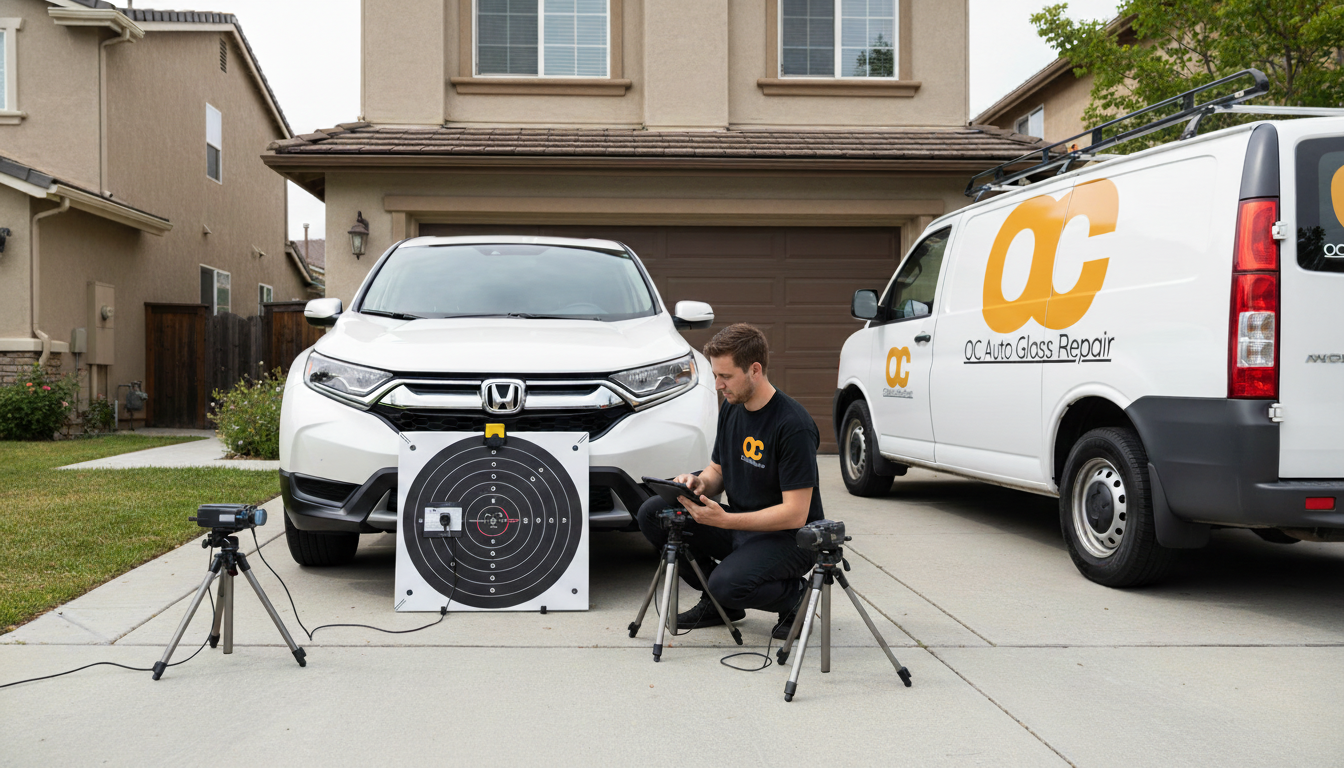
Get precise sensor aiming and verified driver assistance performance with manufacturer procedure based calibration, scan confirmed requirements, and clear completion documentation.
ADAS calibration recalibrates vehicle camera, radar, and sensor systems after conditions that can change aiming angles or reference points. The calibration aligns sensor outputs to manufacturer specifications so ADAS features behave consistently and warnings trigger at the correct time.
OC Auto Glass Repair performs ADAS calibration using professional diagnostic workflows, calibration targets when required, and manufacturer required verification routines when specified. Our technicians review fault codes, sensor mounting conditions, camera position, radar alignment factors, and system readiness to confirm the correct calibration path, then document completion with a calibration report.
We call back within minutes – same day available
ADAS calibration is commonly required after events that can change sensor position, mounting angle, or vehicle geometry. The need is confirmed by diagnostic scan results and manufacturer requirements.
Vehicles with a forward facing windshield camera may require calibration when camera positioning or mounting conditions have changed.
Repairs near bumper mounted radar, grille areas, side radar locations, or camera brackets can change aiming and trigger calibration requirements.
Changes in ride height or alignment geometry can affect calibration readiness and sensor reference accuracy.
Replacing a camera, radar unit, or ADAS control module often requires calibration and verification to restore correct operation.
ADAS systems may require one routine or a combination of routines, depending on the vehicle and the specific system being calibrated. The required approach is selected based on the manufacturer's procedure, confirmed through a scan.
Static calibration uses calibration targets and measurement controls to set sensor angles and reference points to specification. The routine is completed through the diagnostic workflow for the vehicle system.
Dynamic calibration uses a manufacturer required drive routine so the system can learn and verify outputs under specified conditions. Completion is confirmed through the diagnostic workflow.
Some vehicles require both static and dynamic routines for full completion. The required sequence is determined by the vehicle procedure, then verified by scan results.
Every appointment follows a scan first workflow to confirm requirements, complete the correct calibration routine, and document completion. The focus is on accuracy, verification, and clear records.
A diagnostic scan checks ADAS modules for faults and identifies required calibration routines. This step confirms the correct path for the specific vehicle and system.
Calibration routines are completed for the applicable camera, radar, and supporting sensors. The workflow follows the manufacturer's procedure to complete the required steps and confirm routine completion.
System completion status is verified through the diagnostic workflow. If the vehicle requires a drive routine, completion is confirmed after the dynamic routine finishes.
A calibration report is provided to document completed routines and completion status. Documentation supports vehicle records and confirms the work performed.
ADAS calibration centers on the sensors that feed driver assistance functions and the reference points that determine aiming. The exact components depend on vehicle equipment.
This camera supports functions such as lane guidance and forward collision related systems when equipped. Calibration verifies correct aiming and system output alignment.
Front radar supports functions such as adaptive cruise control and braking assist systems, where equipped. Calibration verifies radar aiming and system verification results.
Side and rear radar sensors support blind spot monitoring and rear cross traffic alert, where equipped. Calibration requirements depend on the vehicle system design and procedure.
Surround view cameras and ultrasonic sensors may require calibration when the vehicle procedure specifies it. Calibration verifies alignment and system function where applicable.
ADAS calibration is procedure driven and verification based. The workflow prioritizes manufacturer requirements, accurate routine completion, and documented results.
Call Now +1 (949) 427-9211Each vehicle has defined steps, conditions, and completion checks. The calibration approach follows the procedure for that vehicle and system, confirmed through a scan.
Calibration routines require scan and calibration tools designed for ADAS workflows. Equipment supports routine execution, verification, and report generation based on system requirements.
Calibration results are confirmed through completion status checks and documented in a calibration report. The workflow is built around accurate execution and clear records.
Appointments are available for drivers who need ADAS calibration confirmed by scan and completed by the manufacturer's procedure. Contact OC Auto Glass Repair to request an appointment and receive a calibration report upon completion.
Share the vehicle year, make, model, and the reason calibration is needed, such as windshield camera related change, collision repair near sensors, suspension or alignment changes, or sensor replacement.
Call Now +1 (949) 427-9211